
More than 100 delegates gathered in Nottingham yesterday (17 June) for the annual MariNH3 conference, where research partners shared the latest progress in addressing the technical and adoption challenges associated with developing efficient, low-emission engine technologies powered by green ammonia.
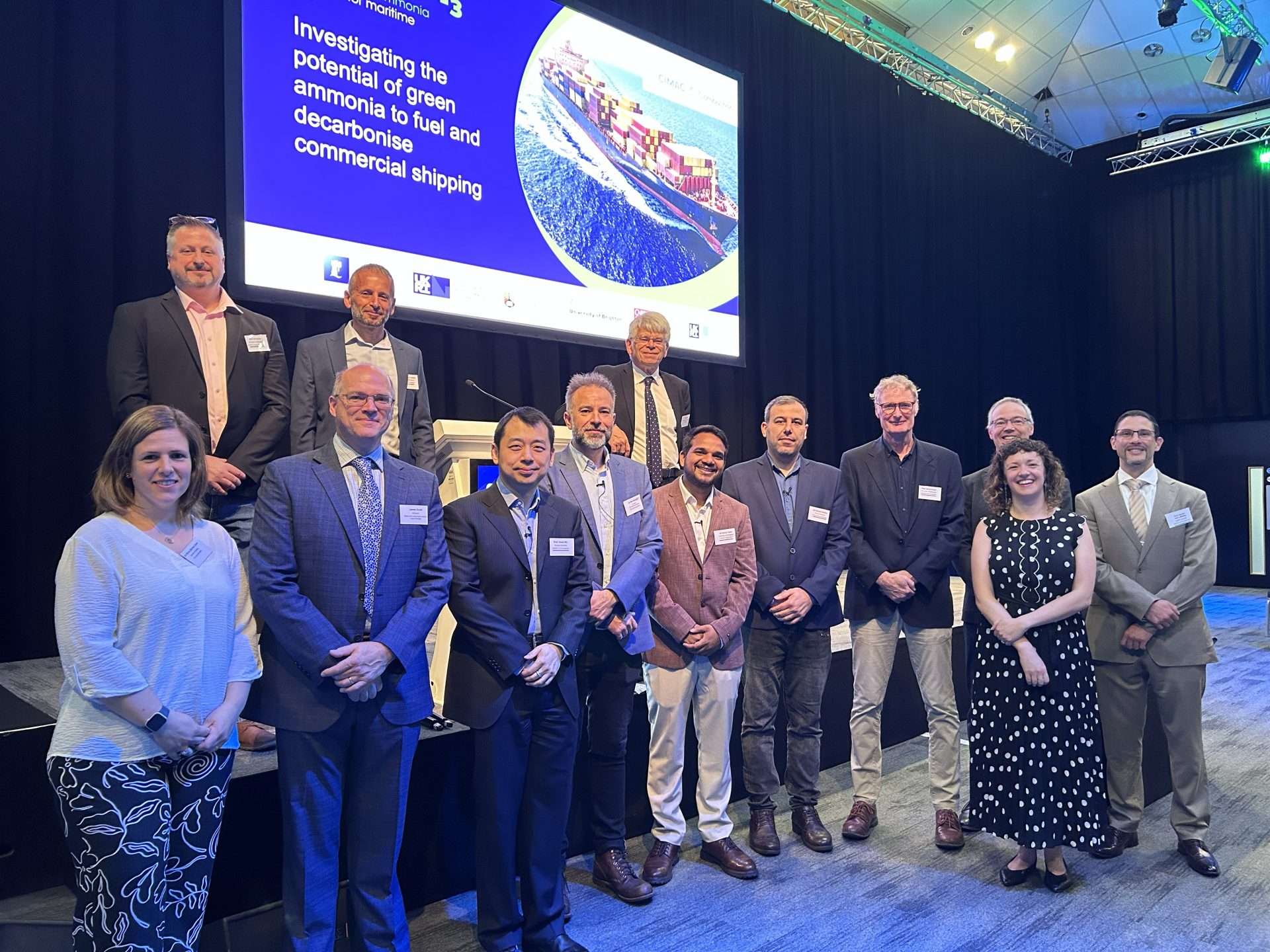
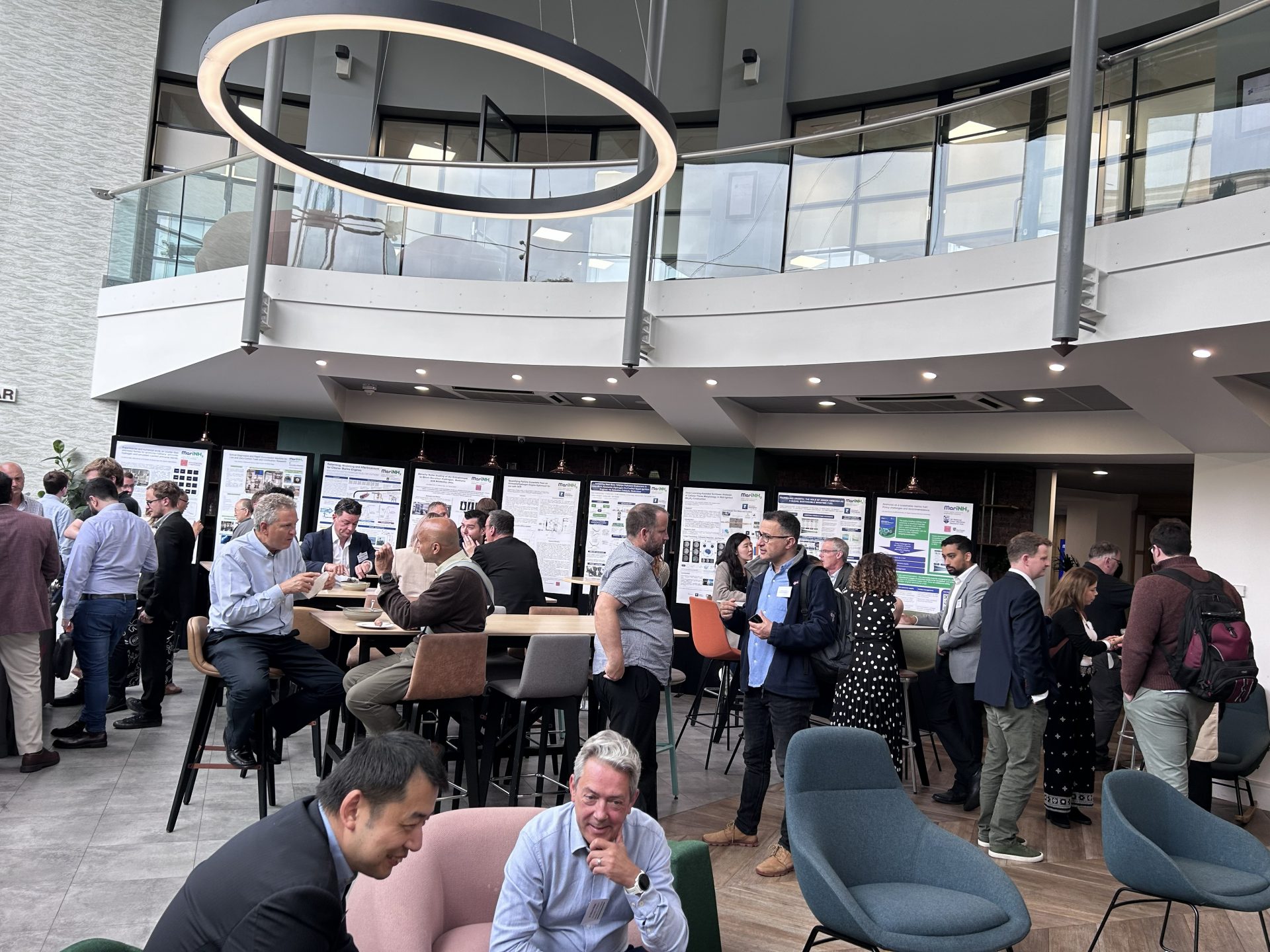
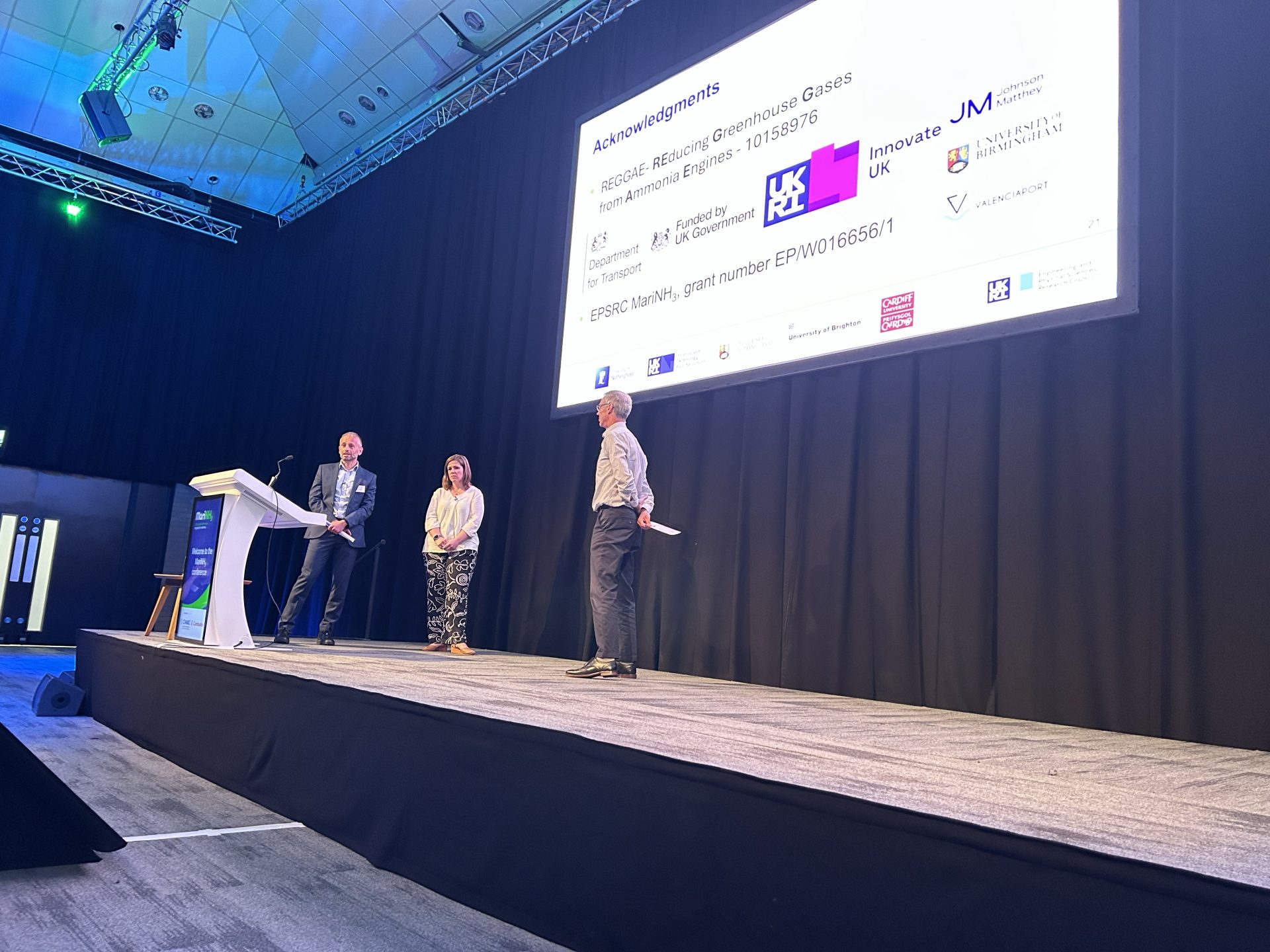
The conference was opened by Professor Alasdair Cairns, Programme Director of the five-year EPSRC-funded MariNH3 research programme. Reflecting on progress since the programme’s launch in July 2022, Professor Cairns outlined the significant technical and socio-economic achievements delivered to date. These include over 40 peer-reviewed journal publications, alongside a series of influential white papers and policy briefings.
The event attracted a diverse international audience, including suppliers, original equipment manufacturers (OEMs), policymakers, academics, and key stakeholders supporting the adoption of green ammonia as a future fuel. Interest in the MariNH3 programme has grown year on year, mirroring the increasing recognition of green ammonia’s potential—not only in maritime applications but across multiple sectors.
Proceedings began with a keynote from Dr Mike Rendall, Chair of the UK Ammonia Alliance (UKAA) and Chief Technology Officer at H-Power. Dr Rendall made a compelling case for ammonia as both a marine fuel and a low-carbon alternative to natural gas. He also highlighted the strategic opportunity for the UK and outlined the UKAA’s ongoing collaboration with government to accelerate ammonia adoption. He noted that the forthcoming UKAA Low Carbon Ammonia Roadmap will further detail this potential.
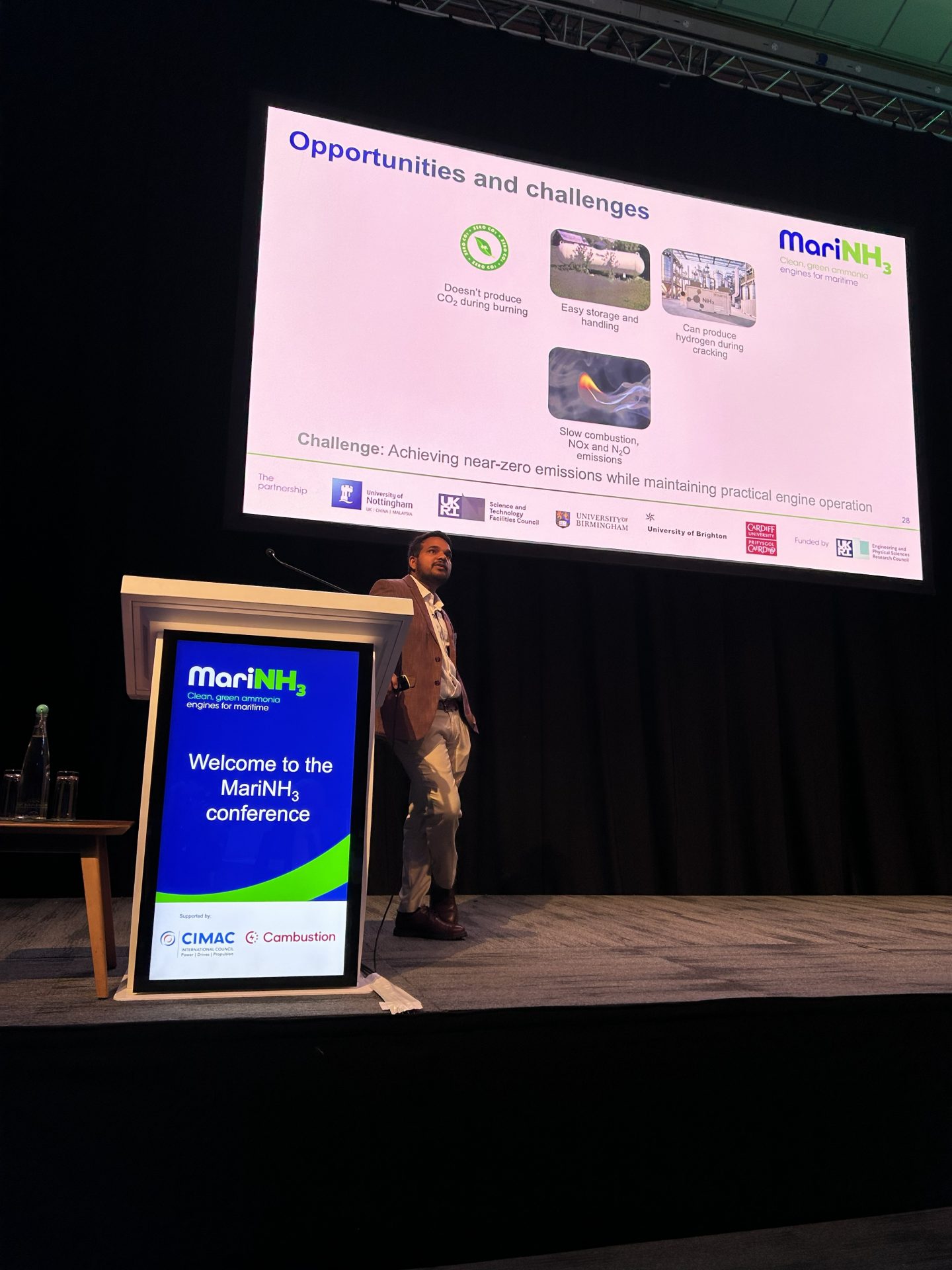
Researchers from the University of Nottingham presented advances in combustion engine technologies capable of running on ammonia while maintaining safe emissions levels. Notably, results demonstrated that nitrogen oxides (NOx) emissions are compliant with IMO Tier III standards across the full operating range, meet land-based EPA Tier 4 limits at most operating points, and are approaching the Euro 7 World Harmonised Steady Cycle (WHSC) limit.
The team at Durham University showcased the development and validation of models for ammonia-diesel dual-fuel engines, alongside optimised ship-level powertrain models for both ammonia-only and ammonia–battery hybrid propulsion systems. These models enable detailed performance analysis, providing critical insights for shipowners considering future fuel transitions.
Further contributions included work from Professor Athanasios Tsolakis (University of Birmingham) and Silvia Alcove Clave (Johnson Matthey), who highlighted advancements in catalytic technologies aimed at reducing greenhouse gas emissions in engine exhaust systems. Professor David Grant (University of Nottingham) presented progress on integrated solid hydrogen and ammonia storage solutions for marine engines.
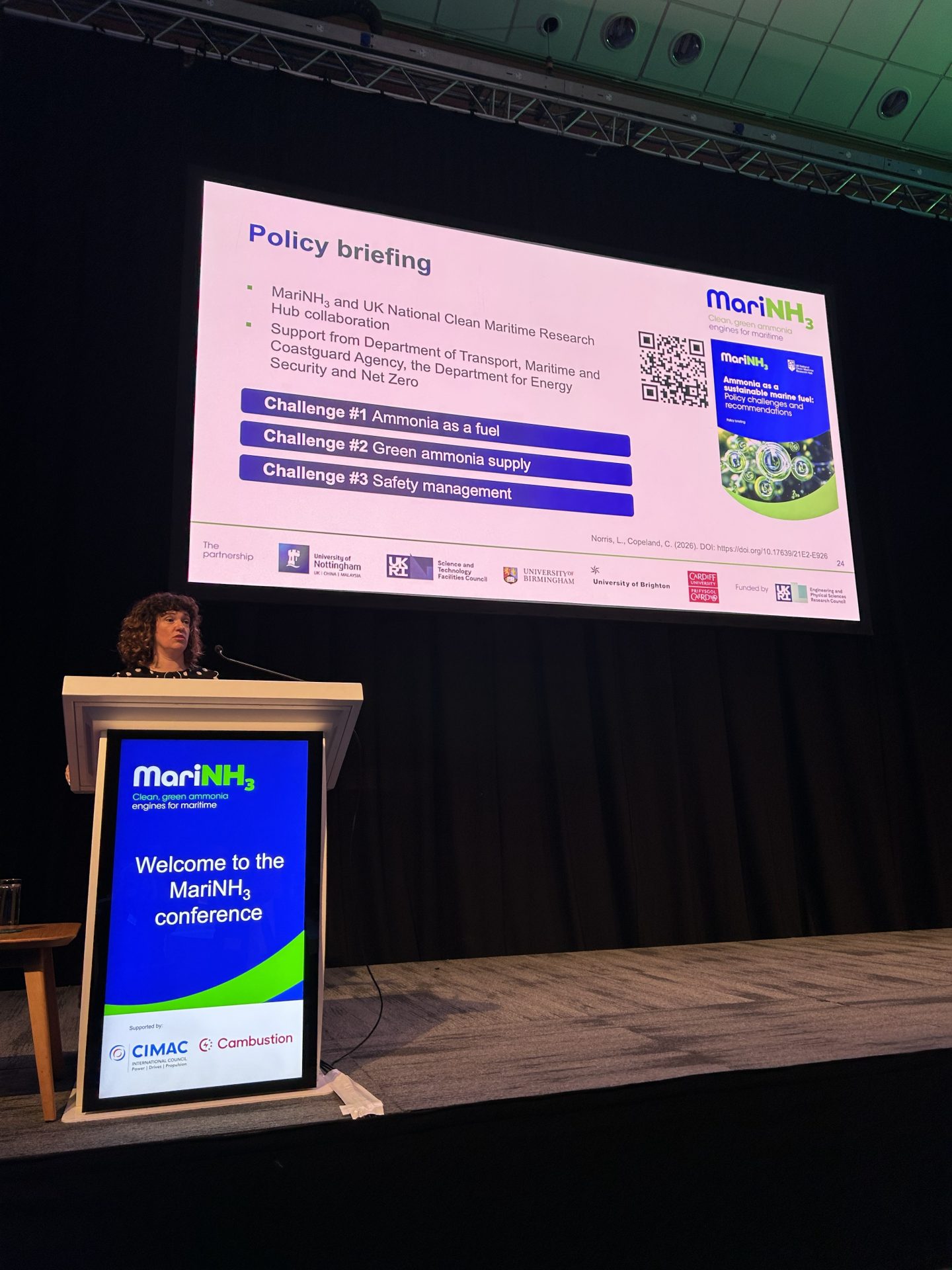
Policy and systems perspectives were addressed by Dr Laura Norris of Cardiff University, who presented key findings from the recent policy briefing “Ammonia as a sustainable marine fuel: Policy challenges and recommendations.” She also announced the release of a new white paper, “Propelling growth: The role of green ammonia as a clean maritime fuel,” which provides a comprehensive overview of the MariNH3 programme’s findings, identifies current knowledge gaps, and sets priorities for future research.
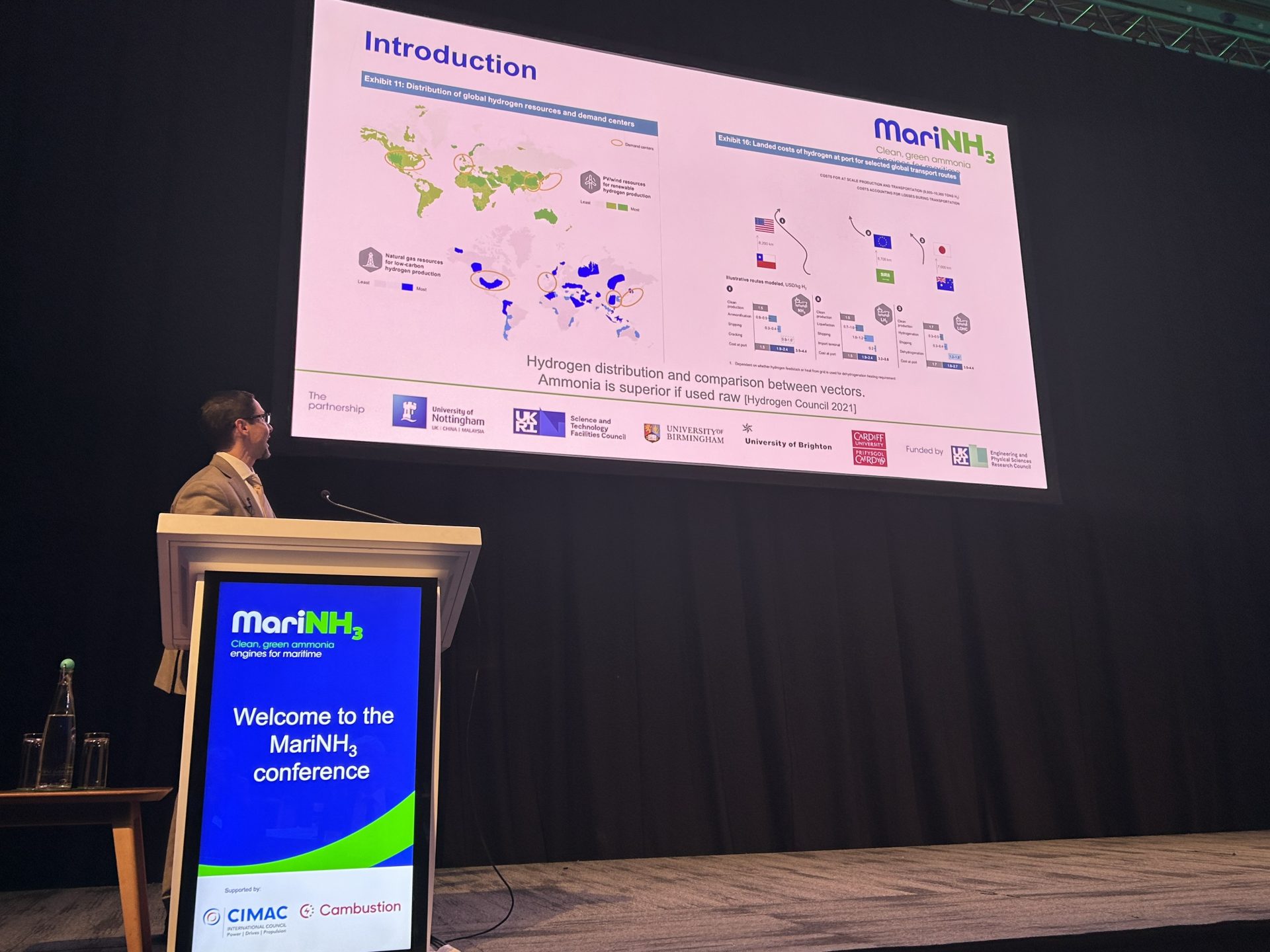
The conference concluded with a presentation from Professor Agustin Valera-Medina of Cardiff University, who introduced AMBURN, a MariNH3 spin-off project investigating the use of ammonia as a fuel in boilers and furnaces.
In addition to the research presentations, the programme featured keynote contributions from James Dodd of Infineum and Dr Felix Leach of the University of Oxford, further enriching discussions on the future of sustainable fuels.
The MariNH3 conference continues to serve as a key platform for collaboration and knowledge exchange, supporting the transition towards low-carbon maritime transport and reinforcing the role of green ammonia as a viable future fuel.
-
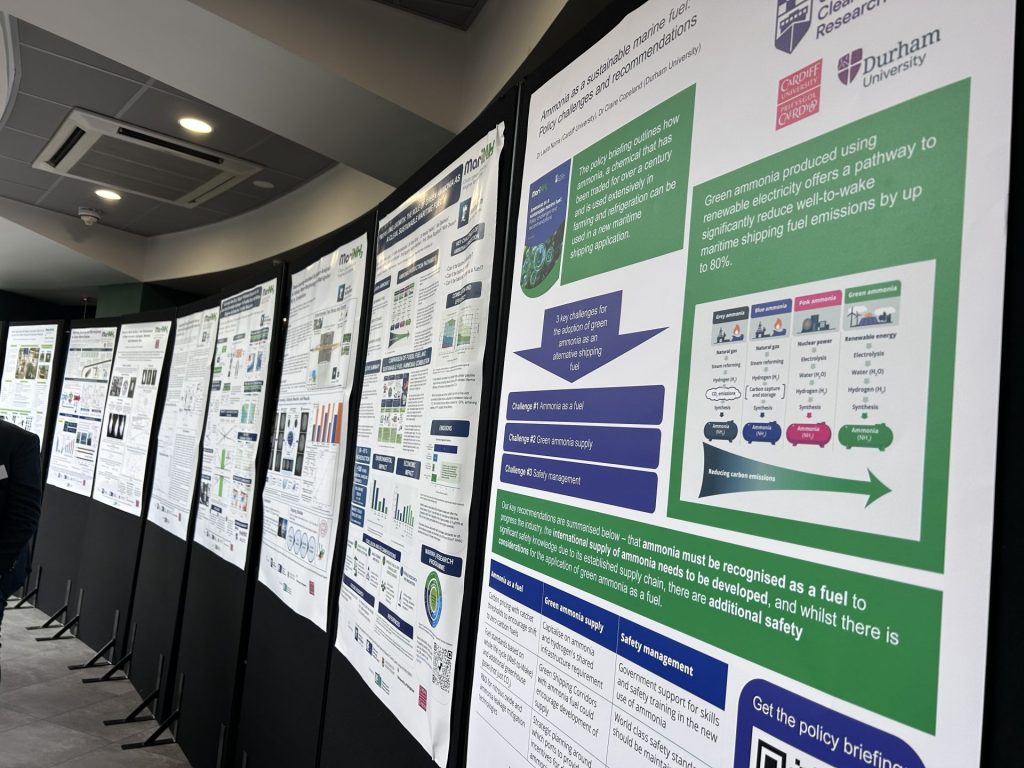
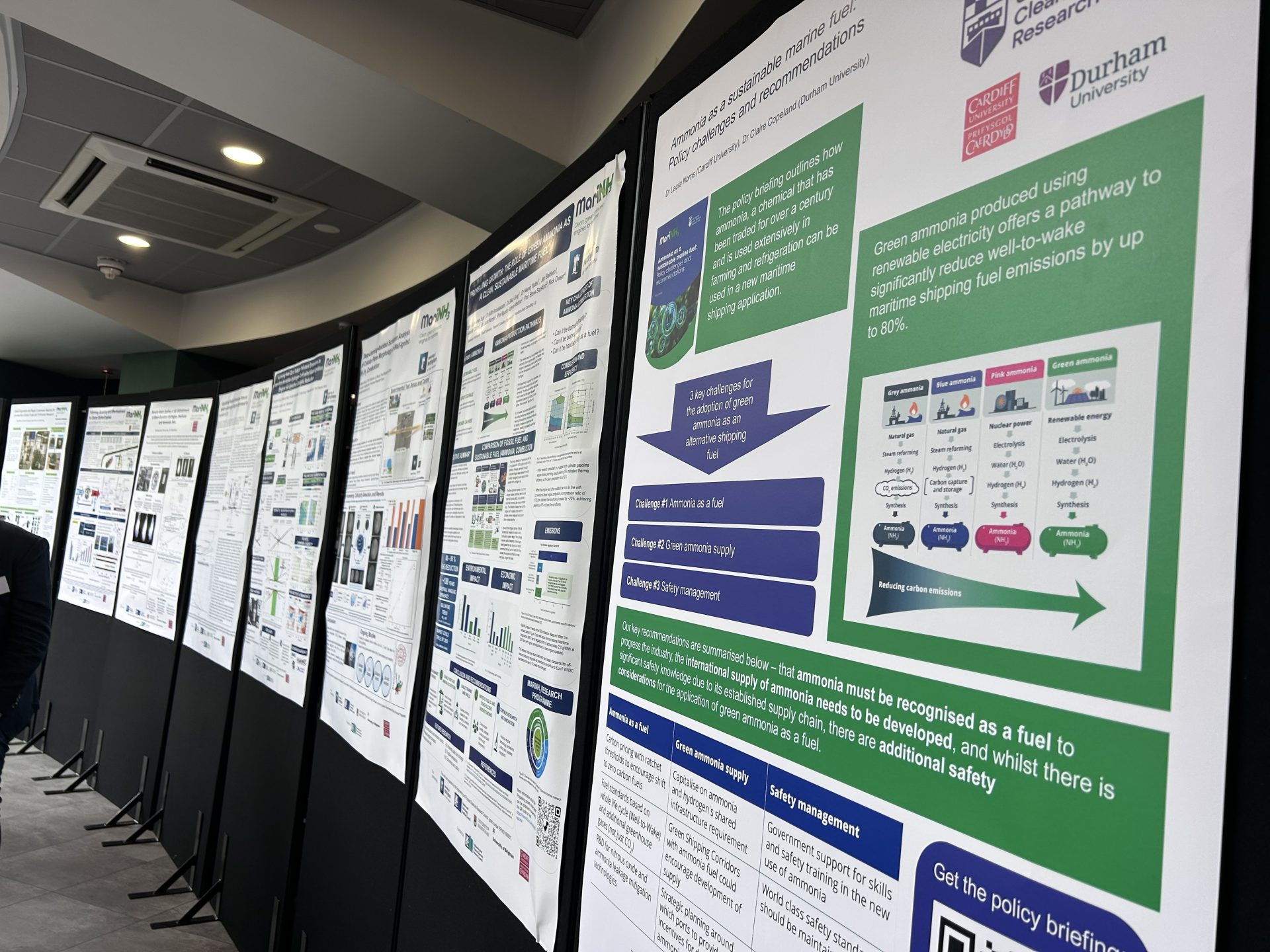
- Conference posters
-
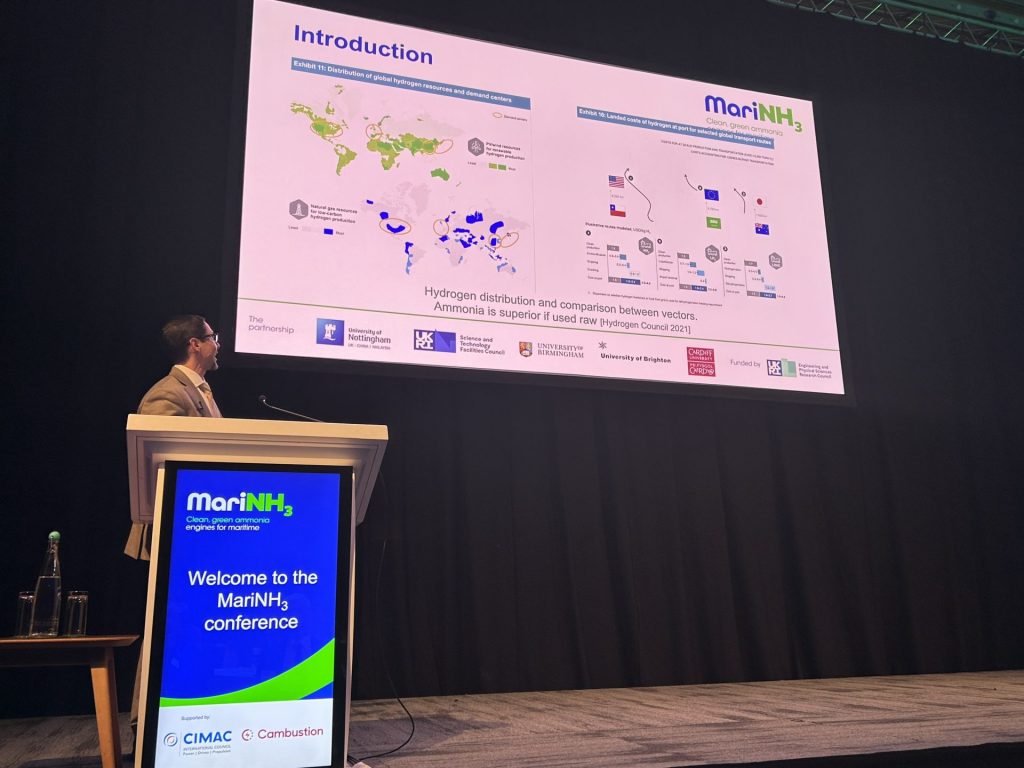
- Prof. Agustin Valera-Medina
-
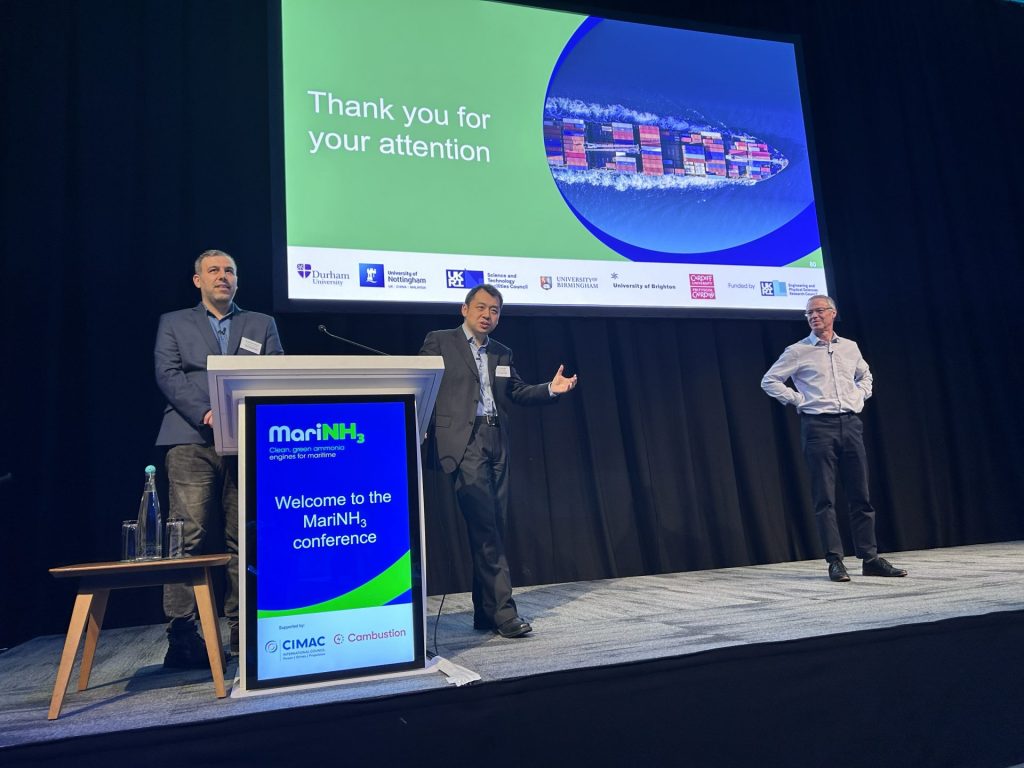
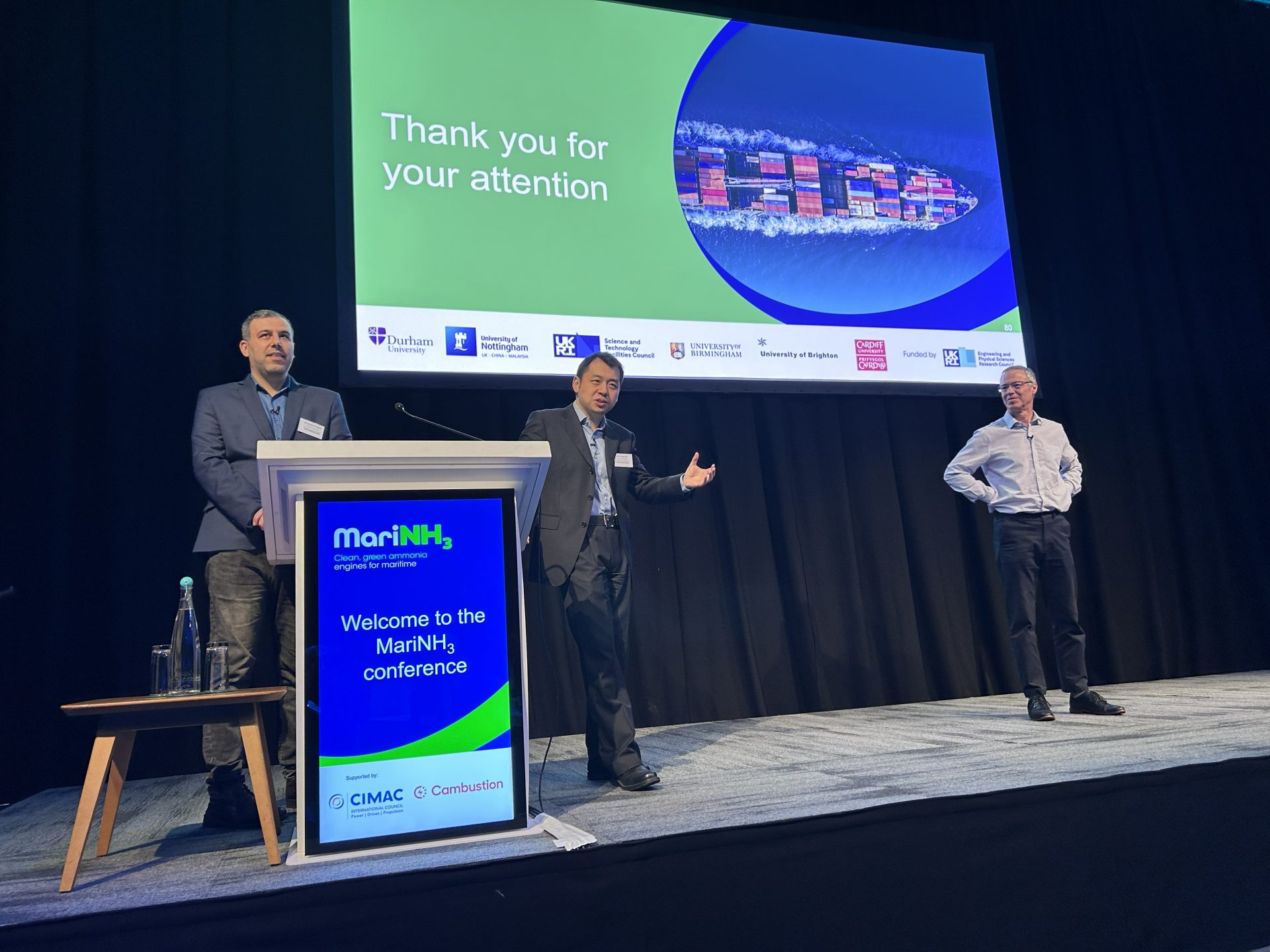
- Prof. Dawei Wu & Dr Ebrahim Nadimi
-
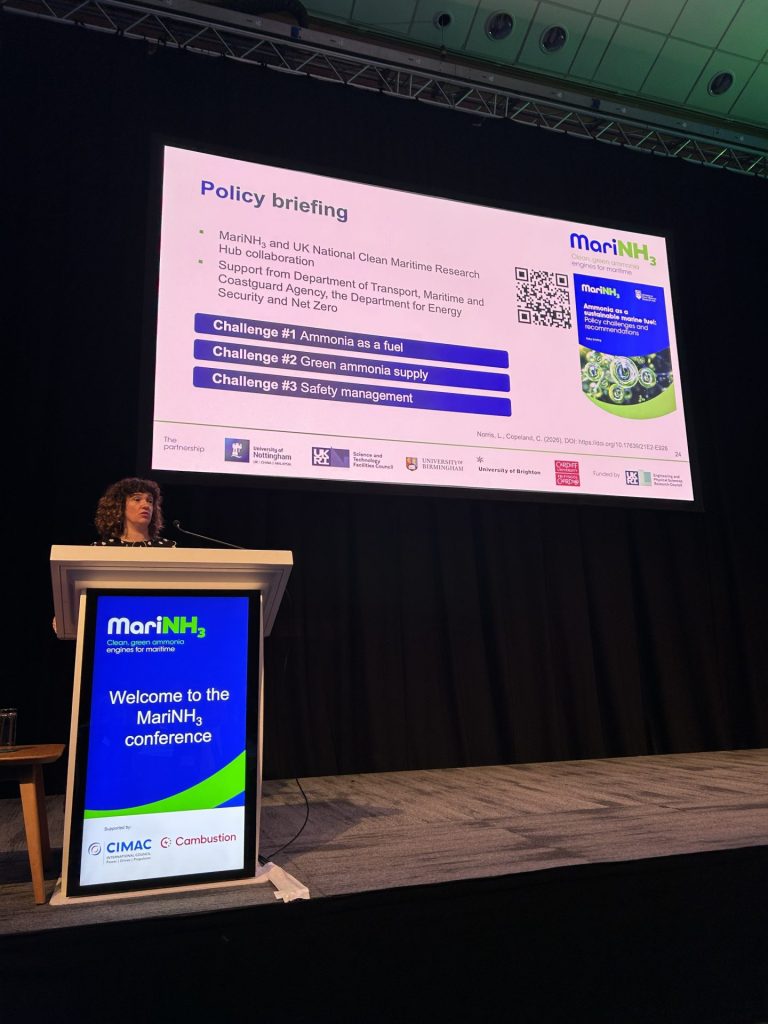
- Dr Laura Norris
-
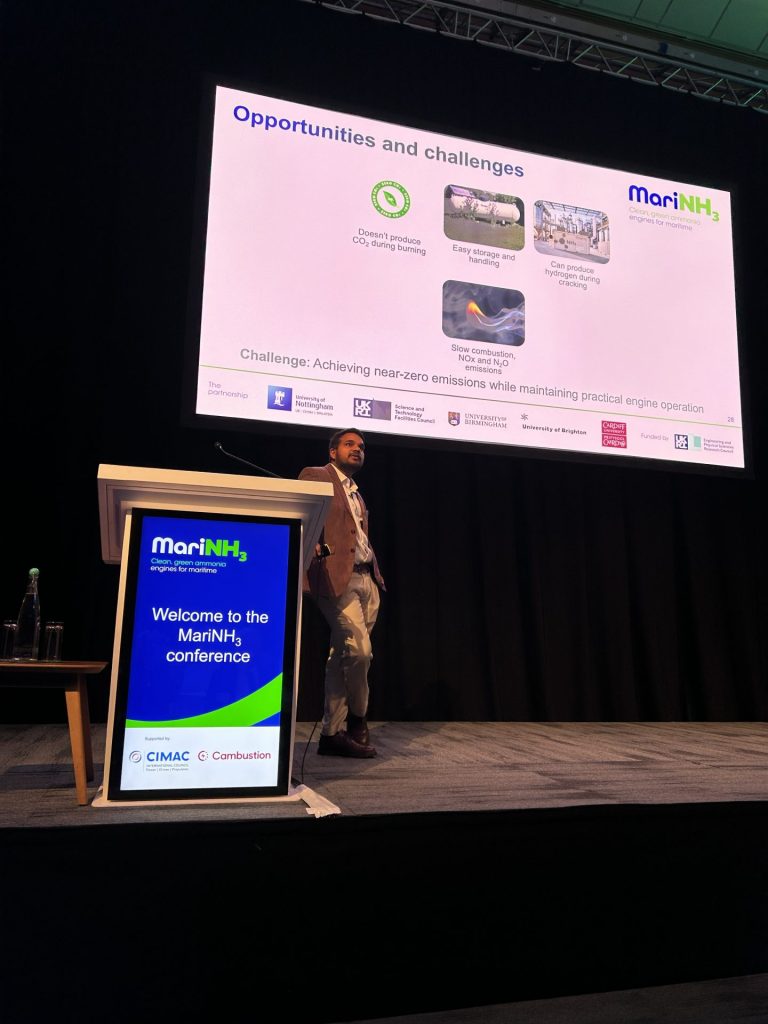
- Dr Neeraj Yadav
-
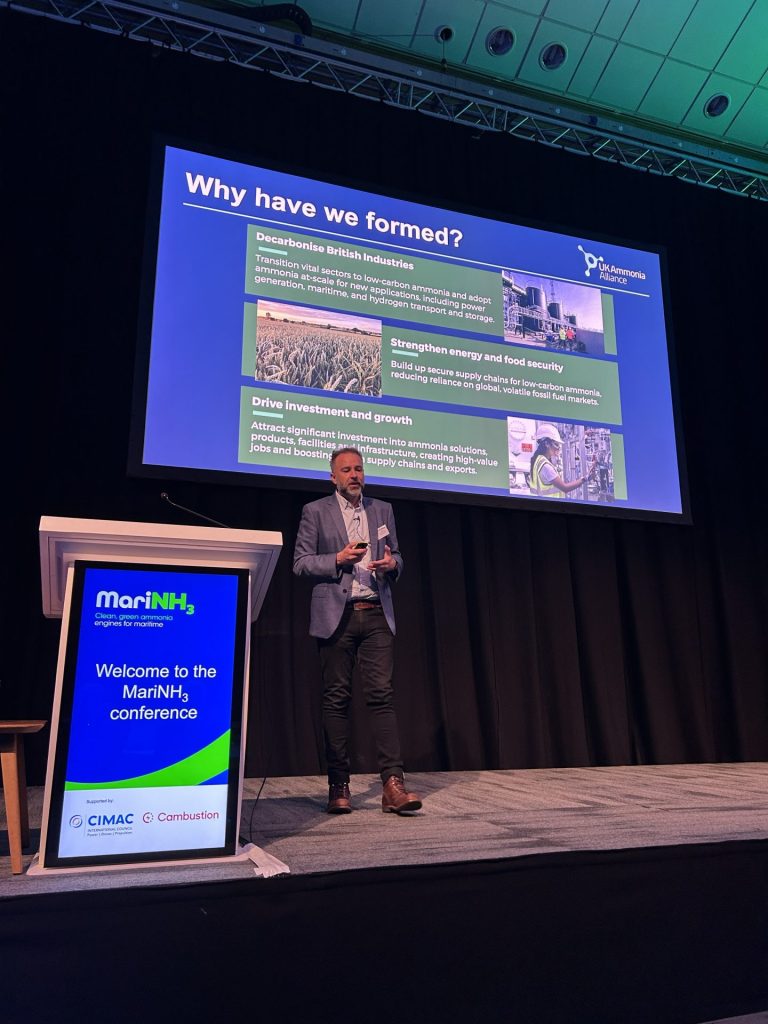
- Dr Mike Rendall

 Sign-up to our newsletter
