MariNH3 Research Explores a Route to Cleaner Shipping
MariNH3 Research Explores a Route to Cleaner Shipping
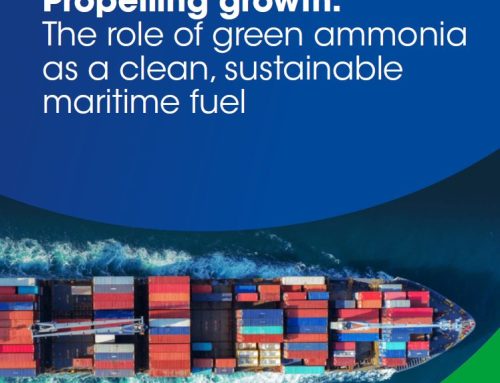
A new MariNH3 policy briefing led by Cardiff University researchers highlights the growing potential of green ammonia as a low-carbon fuel for the global shipping industry while underlining the urgent need for continued research into alternative fuels.
Shipping underpins everyday life, transporting everything from food to clothing around the world. Yet the sector remains heavily reliant on fossil fuels and is responsible for a 3% share of global greenhouse gas emissions. As international pressure mounts to reach net zero by 2050, identifying viable alternative fuels has become a critical challenge.
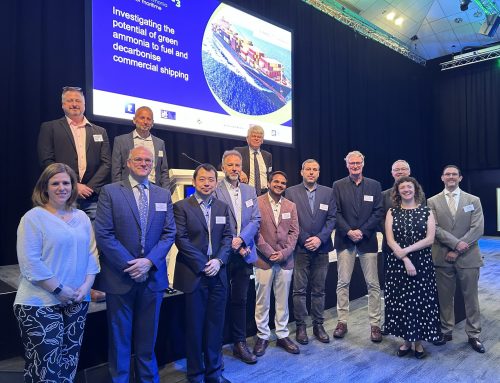
The report, produced through collaboration between the MariNH₃ project, the UK National Clean Maritime Research Hub and partners across academia and industry, explores ammonia as one of the most promising future fuels. The work also contributes to broader efforts within the Cardiff University Net Zero Innovation Institute to accelerate clean energy solutions.
Ammonia is already widely produced and transported globally, with established infrastructure and safety practices. When produced using renewable electricity “green ammonia” offers a pathway to significantly reduce emissions. Research suggests it could cut lifecycle greenhouse gas emissions by up to 80% compared to conventional marine fuels, depending on production methods.
Shipping contributes 3% to global carbon emissions. By using ammonia produced using renewable methods, we could significantly reduce these over time. Dr Laura Norris
Unlike fossil fuels, ammonia combustion produces no carbon dioxide. However, the report makes clear that it is not a simple solution. Technical and environmental challenges remain, including the need to manage emissions of nitrogen-based pollutants and improve combustion performance.
Cost is another key barrier. Green ammonia is currently significantly more expensive than traditional fuels, largely due to the high cost of electricity and early-stage production technologies. However, researchers expect prices to fall over time as technologies scale and markets mature.
Crucially, the report identifies three major areas requiring coordinated action: fuel technology development, large-scale production and supply infrastructure, and robust safety systems. While ammonia benefits from a long history of industrial use, its adoption in shipping introduces new risks, particularly around toxicity and handling in maritime environments.
Policy will play a decisive role. The researchers highlight the importance of carbon pricing, investment in port infrastructure, and the development of “green shipping corridors” to accelerate uptake. They also stress the need for international cooperation and consistent safety standards.
The findings reinforce a wider message: there is no single solution to decarbonising shipping. Instead, continued research into a range of alternative fuels—including ammonia, hydrogen and other emerging technologies—will be essential.
This is where collaborative research initiatives are critical. By bringing together expertise from universities, industry and government, programmes linked to the Net Zero Innovation Institute are helping to address the complex technical, economic and societal challenges involved.
As the transition to cleaner shipping gathers pace, sustained research and innovation will be key to ensuring that new fuels are not only low-carbon, but also safe, scalable and economically viable.



 Sign-up to our newsletter
